
Frequently Asked Questions About Chiropractic
Your questions about chiropractic, answered.
What a process! You’ve been through our Comprehensive Neuro-Structural Examination, reviewed all the results (yes, we know, there was a lot to cover…), received a crash course in spinal and neurological function, and have been accepted into our corrective care program.
Still, there may be some looming questions about chiropractic we didn’t answer, and we want to make sure nothing’s left unanswered.
That’s why we’ve amassed this mega-list of the most common (and not so common) questions we field every day… we know if one person is asking, there’s likely ten others wishing they knew the answer too!
What exactly is a chiropractic adjustment?
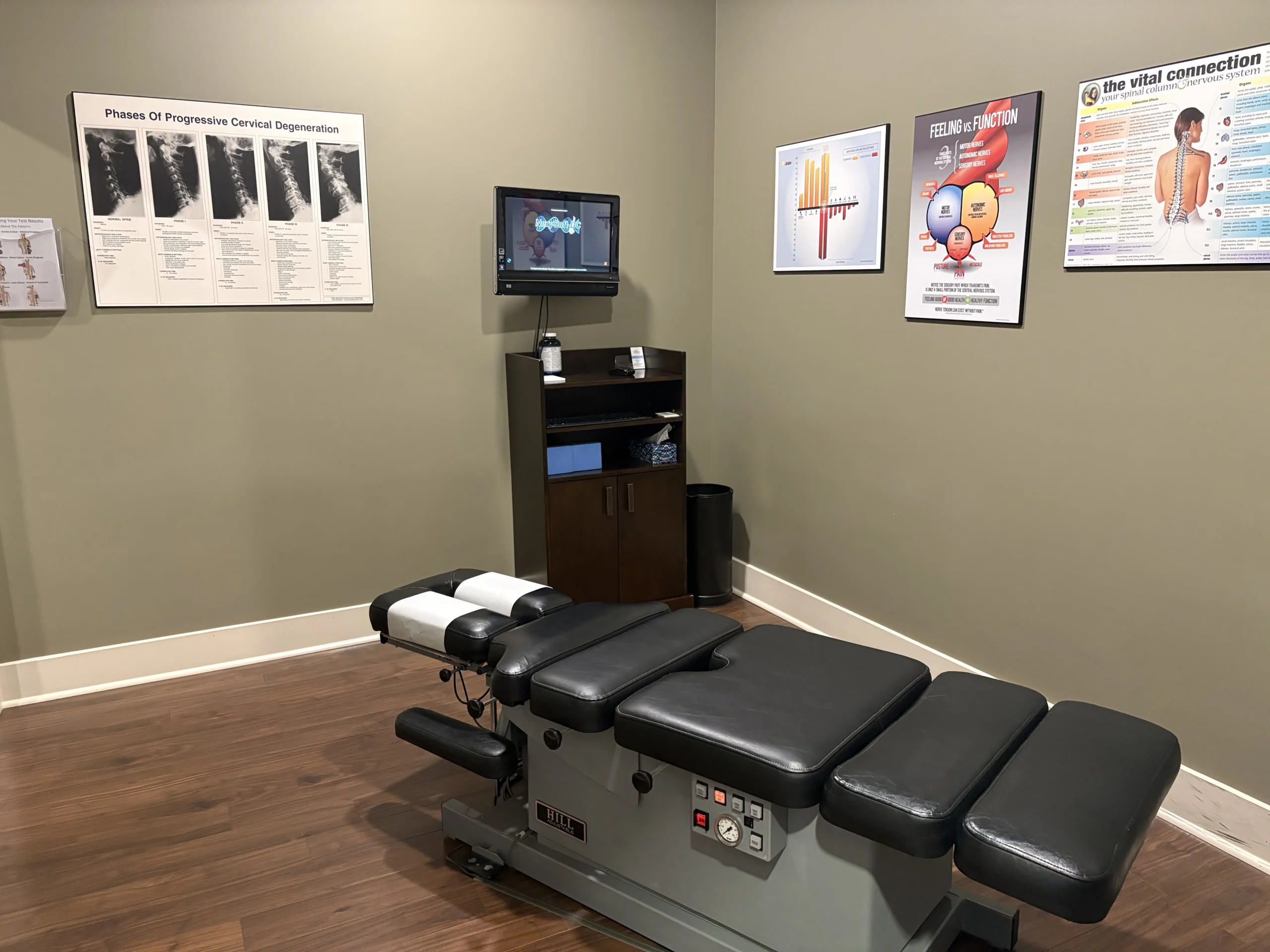
At your first check-up, you probably noticed a few key things – it was fast, gentle, and seemed to have a lot to do with your feet… We’ll get to that one in a moment, but first…
As Life By Design Chiropractors, we analyze and correct structural distortions in the spine and pelvis. These deviations in normal alignment and motion of the vertebrae place stress on the nerves and disrupt the way your brain and body communicate. The technical terminology for this condition is vertebral subluxation (you can just think about it as ‘structural distortion’).
An adjustment is how we correct the structural distortion in your spine.
An adjustment is different from a manipulation in two ways:
- An adjustment is always delivered specifically to an area of the spine that is shifted – not just an area that hurts. Vertebral subluxations are most often painless as only a small percentage of the nervous system receives and reports pain. You may have a subluxation impairing your body’s function and yet have no pain.
- An adjustment is not accomplished by simply popping or cracking the spine. Although some audible sounds may accompany some corrections, the sound has nothing to do with whether it worked.
How do you know when an adjustment worked?
The first thing we need to do is define what is meant by ‘work.’
In the context of a chiropractic adjustment, ‘working’ means that there has been a measurable reduction in stress on the nervous system as a result of correcting the underlying distortion in the spine.
Primary indicators the doctor may use at any given checkup include balancing of leg lengths (this is what we check when we’re at your feet), changes in breathing rate and rhythm, palpable (observed by hand) improvements in motion of the spine, and changes in muscle tension surrounding the affected vertebrae.
In short, the analysis used by your doctor during your checkup will determine if a correction worked or did not work. This is exactly why you will notice your Doctor re-checking your spine following every correction.
Longer-term indicators include things like improvements in your posture (being able to stand up taller or straighter), optimal motion throughout the spine, symmetry of muscle size and strength along with objective changes in Electromyography and Thermography identified on your comparative examination results.
Many patients tell us they notice more energy and better sleep as their care progresses. We track these changes, but we never promise them.
Why don’t I feel any different after a chiropractic adjustment?
You originally came in because you wanted help with a problem, right?
Do you remember when your doctor told you that what you thought was your problem likely wasn’t your problem at all, but instead it was collateral damage?
The objective of a chiropractic adjustment is to reduce as much stress as possible from your nervous system. This doesn’t always equate to feeling better, but it DOES help your body to function better EVERY time.
You may not immediately be aware of the change that has occurred, as it takes time for your body to adapt to the correction, and many of the functions that could improve cannot be ‘felt’.
Structural distortion is very often accompanied by chronic inflammation and soft tissue damage, both of which will take time to heal. As scar tissue starts to break down, inflammation clears and the structure of your spine changes…rest assured that each correction moves you slowly and steadily toward a healthier version of YOU!
Is it ok to have chiropractic adjustments on back-to-back days?
Short answer – Yes. In fact, in the first phase of care we often recommend you have back-to-back check-ups so that we can monitor how quickly your body falls back into the old patterns of distortion.
Initially, this may occur within hours of your checkup; however, as your body begins to adapt to the adjustments, we typically see fewer and fewer adjustments needed on the following day, and in some cases you may not require any adjustments at all!
When we see this, it’s a clear indication that you are ready to progress to the next stage in your care and we can decrease the frequency of your visits.
I’m starting to notice that I have more energy and I’m sleeping better… is this normal?
Yes, this is normal. Many patients notice changes like these once we begin to see structural correction in your spine. Reducing stress on the nervous system can improve both sleep quality and quantity.
As your spinal alignment and motion improve, your body becomes more efficient at utilizing energy. This means there are more resources available for your body to use for all of your other functions instead of allocating so much to stabilizing your structural distortion.
Sometimes there are very few adjustments required, while other times there are several… what’s going on here?
Every time you come in to the office and lay down on the table, your spine is different than the last time you came in. This is why every single time you come in, we check and analyze your spine to determine if any adjustments are even necessary. Some days there will be more distortion, therefore more adjustments needed, while other days, you’ll need fewer.
When we consistently see the need for fewer (or sometimes even NO) adjustments, it’s a clear sign that your body is recovering and adapting better – in other words, you are getting healthier! When it happens consistently, and your test results support it, your checkup schedule will change to match your goals.
In fact, it may surprise you that our ultimate goal is to check your spine and nervous system and find that no adjustments are required. The goal is to adjust as little as needed to maximize your results!
What can I do to speed up my recovery?
It’s fair to say we all want the same thing…the best results in the shortest amount of time. So it’s totally normal for you to ask what else you could be doing to speed up your Neuro-Structural Correction.
In our experience, there’s a very specific process you will need to go through, and it’s often slightly different for each person.
You will definitely be prescribed specific corrective mobility exercises along with strengthening and stabilizing exercises when we feel you are ready. We may also recommend getting the help of a registered massage therapist and/or physiotherapist.
One blanket recommendation that we can make for everyone is to make sure you are getting lots of regular, low-level movement in your day.
As humans, we are designed to move…a lot. Aim to walk at least 45 minutes every day above and beyond your normal activities. Split this up however you want, but an easy strategy would be to take a 15-minute walk in the morning before work, at lunch, and after dinner. If you have kids, get them involved too – this is an excellent habit to instill in them at a young age.
Another excellent habit to establish is the sit-busting habit: for every 30 minutes that you sit, get up and move for 2 minutes. In those 2 minutes, you could go for a quick walk, do some jumping jacks, air squats, or climb up/down some stairs. It may seem like a distraction from your work, but a 2022 review of 22 studies found short breaks boost energy and reduce fatigue.
Should I exercise before or after my chiropractic adjustment?
The most important thing is that you find time to fit both exercise and your checkups into your busy week. In our experience, your personal schedule will dictate this more than anything else.
However, if you find yourself with the freedom to choose, then you are always better off exercising following your checkup, and here’s why…
Since the purpose of your check-up is to maximize your brain-body connection by correcting any distortions in your spine, your body will work more efficiently and effectively following any required corrections.
After your check-up, you’ll be (re-)programming better movement with your training, getting more out of your session, and lowering your risk of injury.
Do I have to attend the workshops?
If your goal is to get the best results in the shortest amount of time, then the Life By Design workshops are a no-brainer to attend.
Figuring out what you need to do in order to solve your problem and be healthy can get really confusing… These workshops are designed to show you exactly what you need to know to start meeting all your body’s fundamental requirements for health. Not to mention, the information and actions are key components of your Neuro-Structural Correction.
What is the best way to fuel your body so that you lower chronic inflammation, have abundant energy, and healthy body composition? That’s Eat By Design. What’s the most efficient way to build better movement patterns that can reduce the amount of stress on the spine? That’s Move By Design. How do you ‘manage’ stress and create a system that ensures you create the life of happiness that you want and deserve? That’s Think By Design.
The best part is that we have taken the time (literally thousands of hours) sifting through all the research to make sure you’re getting the most up-to-date information based on more than 20 years of experience in the health and wellness field.
Should I also be seeing a Physiotherapist or Registered Massage Therapist?
Because we focus on a very unique aspect of health known as Neuro-Structural Correction, the combination of our approach and massage and/or physiotherapy can provide great results. We work very closely with several excellent therapists in our neighbourhood and never hesitate to refer you to the most appropriate one for you. Here are some general guidelines:
Physiotherapy
If you’ve just rolled your ankle or have a specific ‘extremity’ problem (arm or leg), then, in conjunction with your corrective care, seeing a good physiotherapist that focuses on hands-on care and exercise rehabilitation is your best bet. If you want some recommendations, send us an email – we regularly refer to great physiotherapists across Ottawa.
Massage Therapy
Properly applied massage therapy focuses on rebuilding and maintaining healthy muscles. So if you have a specific muscle problem and are looking to restore normal muscle tissue, then a good Massage Therapist is your best bet. Some things to consider when choosing a good therapist are whether or not they do a thorough assessment and provide you with specific recommendations for follow-up. Ask us for a recommendation at your next visit.
How come no one has ever told me this is what Chiropractic is all about?
You’ve probably wondered this since we started talking to you about the primary problem in your spine…
And we would totally get it if you are curious why, after all those visits to your medical doctor (or Physio, RMT, Acupuncturist, etc.) to get help with your problem, they never mentioned that structural distortions in your spine sit at the root of your problem!?
We’re operating in different models of care, looking for different things and correcting them with a different standard in mind. Here’s what we mean…
Other health care professionals operate in a model dictated by symptoms and conditions. In this model, the goal is to eliminate or at least manage your symptoms.
Think of your typical interaction with your medical doctor: you tell them you have a specific symptom, and they figure out the best way they know how to remove or manage that symptom or condition.
And that’s great! Seriously, this is a great model for relief care, one that we’re so grateful to have access to if we ever need it.
But…
Let’s be clear. It’s not about creating health.
Being symptom-free and being healthy are not the same thing. It’s like thinking not-poor is the same as rich.
That’s why we not only focus on addressing the core problem in your spine, but we also teach you step-by-step how to actually create long-term health for you and your family.
Why does my insurance only cover a portion of my required corrective care?
Picture this – your insurance company sends you a letter to say “we care about your health, that’s why we’re now going to pay for your organic vegetables, and we’ll also cover your personal training, yoga classes and an extra week of holidays this year!”
If you’re fortunate enough to have private health insurance, you’re probably thinking, “What insurance does this guy have?” Followed quickly by “that plan must cost a fortune!”
Of course, there’s no such plan… and that comes down to the primary purpose of insurance of any kind: it’s to help you in the case of emergencies – in this case, health emergencies.
And while it’s true that your insurance will cover a few visits – typically enough to start seeing changes in those secondary problems you mentioned – it is not designed to address the primary, root problem.
Since our focus is on tackling the primary problem, it’s no surprise our recommendations don’t line up with what your insurance provides: the goals are different.
If you’re fortunate enough to have private health insurance, think about it like a ‘health’ coupon… one that can be used to reduce the cost of your corrective care and get you started on the path towards a healthier life.
What I can say is that typically once people get through the initial set of recommendations (i.e., finished the rebuilding phase of your care), they are so happy with the results that they are willing to pay their own way to maintain the positive changes and continue their care – just as they continue to pay for their own fresh fruits and veggies, gym membership, and family holidays.
For those who do not have access to this ‘coupon’, it shouldn’t stop you from taking the necessary actions to solve your problem and create as much health for yourself as possible!